

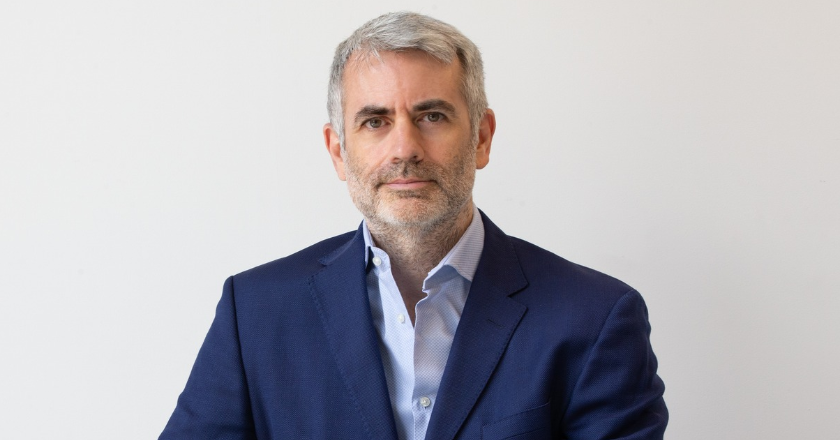
Ángel Fernández explains why clear business goals, simpler systems and trusted data are essential to unlocking value from ERP investment
SAP modernisation can deliver a new platform without changing how a business operates. Choosing the technology before defining the intended business outcomes is a common mistake, says Ángel Fernández, Chief Executive Officer, SEIDOR Middle East.
Fernández argues that migration, simplification and process redesign require distinct decisions, with executive commitment extending beyond the technical deployment.
Fernández identifies standardised processes, trusted data and a clean ERP core as foundations for organisations seeking greater value from AI. The message to CIOs is to secure board support for measurable business improvements and fund the simplification and data work needed to achieve them.
Speaking about SEIDOR’s regional priorities, Fernández also outlines plans to expand local capabilities across SAP Cloud ERP, SAP Business One and analytics, with a focus on growing mid-market businesses in retail, distribution, manufacturing and services.
Interview excerpts
Your report says SAP modernisation is “not one decision, but three.” What’s the most common mistake you see companies make when they treat it as a single project?
The most common mistake is choosing the platform before deciding the ambition. Companies spend months on the technical path and never clearly say whether they only want to move, whether they want to simplify, or whether they want to change how the business works. When you don’t decide, you end up with a technical move by default. Then two years later the board asks where the new capabilities are. Companies that separate the three decisions negotiate better budgets and get better returns. Those that treat it as one decision usually pay twice.
Why is the gap so wide that out of 94% of the surveyed companies, only 15 actually redesign their processes?
A platform change is something IT can plan and deliver. Redesigning a process means finance, operations and sales must agree to work differently, and that is a leadership decision, not a technical one. Many companies also lack the internal profiles to do it, and they run out of budget or energy after go-live. So, they stop at the first level and promise themselves they will do the rest later. Very often, later never comes.
71% of CIOs say custom code and technical debt are slowing them down, but only 23% plan to simplify. If everyone recognises the problem, why is so little being done about it?
Every custom development has an owner in the business who thinks it is essential. Deciding what goes back to standard, what moves out of the core and what is eliminated is uncomfortable, so it gets postponed. The good news is that nine out of ten CIOs in our study said they would accept more standard processes for a system that is easier to evolve. The will is there. What is missing is executive sponsorship to make those decisions and stick to them.
You argue that the companies that benefit most from AI won’t be the ones that invest most in AI, but the ones that best prepared their core. What does “preparing the core” look like in practice?
First, a clean core, with standard processes and custom work kept outside the ERP, so the system can keep up with every new release. Second, data you can trust, with clear ownership of master data. Third, processes that are consistent across the business, because you cannot automate something that is done in five different ways.
Most companies today use AI on top of their existing processes, which brings some efficiency, but without a prepared core, it delivers only a fraction of what it promises.
What is driving SAP decisions specifically in the UAE and wider GCC, such as national digital agendas, e-invoicing mandates, data residency or local cloud availability?
All of these, but compliance is the most immediate trigger right now. E-invoicing in the UAE, following Saudi Arabia, is forcing every company to look at how clean and connected its ERP really is. Data residency and local cloud availability have also removed one of the biggest objections to moving to the cloud in this region. On top of that, the national agendas are pushing companies to grow, expand into new markets and professionalise. For many mid-sized companies, that means outgrowing their current systems faster than they expected.
If a CIO reading this has one budget conversation with their board this year, what should they ask for?
I would ask for a clear ambition, not just a budget for a project. Agree with the board on what the business should be able to do differently after the change, and fund that, including simplification and data, not only the technical move. And I would ask for it in phases. Start with the area that matters most to the business, show results quickly, and use that to justify the next step. Boards are much more willing to invest when they see value in months, not years.
What are Seidor’s plans in the Middle East over the next two to three years, in terms of team, investment, sectors and clients?
Our focus is clear: we want to be the reference SAP partner for the mid-market in the region. We have offices in the UAE, Saudi Arabia and Kuwait, and we will keep growing our local teams, especially around SAP Cloud ERP, SAP Business One and analytics. We will continue supporting our existing customers in their next steps, and we want to bring many more growing companies onto the cloud with faster, more predictable projects. Sectors like retail, distribution, manufacturing, and services are where we see the strongest demand.
Source: Tahawul Tech
