


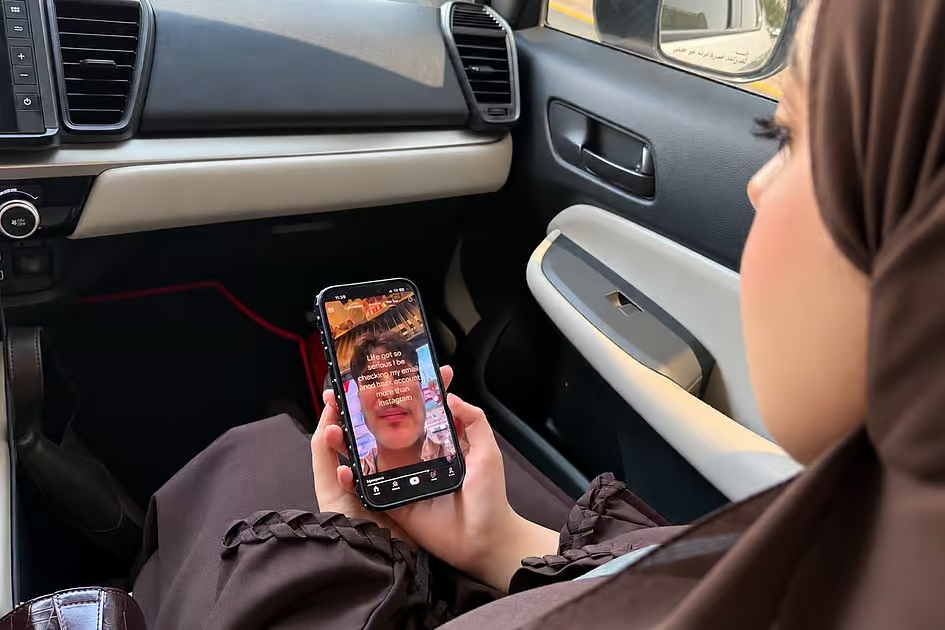
For some, TikTok is a way to relax after a busy day. For others, it has become a habit that is difficult to break, with hours passing by as they scroll through short videos.
But how much does the app really affect the way young people spend their time?
Three UAE residents, aged between 17 and 23, shared how TikTok has become part of their daily routines and whether they believe it has affected their lives.
8 hours a day on TikTok with no plans to stop
For 23-year-old Alreem Ali, TikTok has become such a regular part of her life that she struggles to remember what she used to do before downloading it.
“The first thing I do when I wake up is check TikTok. Then I get ready for work and continue scrolling during the car ride,” she said.
Alreem estimates spending around eight hours a day on the app, much of which she attributes to her work routine.
With a 40-minute commute each way, she often scrolls through TikTok while travelling as a passenger.
She also turns to the app between tasks at work, where she can quickly scroll through short videos since watching YouTube or a show isn’t an option.
“When I’m at work, I want something quick. I can’t sit and watch something long, so TikTok is the easiest option,” she explained.
However, she admits that spending so much time watching short videos has affected her attention span.
“I want everything quickly now. I want that instant dopamine,” she said.
Even watching a show has become difficult. She often leaves it playing while scrolling through TikTok, only to realise she has missed parts of the episode.
“A 40-minute episode can take me two days to finish because I keep replaying the parts I’ve missed while watching TikTok,” she admitted.
She also described how opening the app to search for something simple, such as a recipe, can turn into an hour and a half of scrolling without her noticing.
Part of what keeps her watching, she explained, is TikTok’s algorithm, which continues showing her videos based on her interests.
“I always feel like I need to watch just one more video,” she said.
Alreem also sees a positive side to the app, particularly when it comes to communicating with people her age.
She explained that TikTok trends and reactions have become part of everyday conversations at work, where colleagues often understand jokes simply by referring to a viral video.
Despite recognising how much time she spends scrolling, she has no plans to stop.
“I know there are negative sides to it, but it gives you a quick feeling of happiness. I don’t regret downloading TikTok, and if I could go back in time, I’d still download it,” she said.
How deleting TikTok helped her get more done
For 21-year-old Alia Saif, balancing university and work became more difficult when short TikTok breaks started taking up more of her time.
Alia, who is both a university student and an employee, noticed that tasks she would normally complete in an hour were taking twice as long because she kept taking breaks to scroll through the app.
“I would take a 10-minute break to watch TikTok, but then I’d keep scrolling for longer than I intended. Something that should have taken me an hour would end up taking two,” she said.
She explained that she often turned to TikTok when her mind was busy with assignments, work or upcoming exams, using short videos as a way to relax before returning to her responsibilities.
However, things changed when she decided to temporarily delete the app.
“When I deleted TikTok, I realised how much more I could get done. I would finish my work straight away because there was nothing distracting me,” she said.
Since then, Alia has made an effort to reduce her screen time, which previously reached around four hours a day.
She now tries to finish her assignments and work before opening TikTok, keeping her phone away whenever she needs to concentrate.
She has also stopped checking her phone immediately after waking up, choosing to get ready and start her day before looking at social media.
“On days when I don’t spend much time on TikTok, I feel like my day has more blessings. I feel like I’ve accomplished so much, even if I haven’t done anything particularly big,” she said.
Although she still uses the app, Alia believes the time she previously spent scrolling could have been used more productively.
“If I could go back in time, I wouldn’t download TikTok. I’ve realised that I can enjoy my day more and get things done without spending so much time on the app,” she said.
Scrolling through TikTok while walking 20,000 steps a day
For 17-year-old Salem Hamad, TikTok is part of his daily walking routine.
The student aims to walk 20,000 steps a day, spending his walks scrolling through videos on his phone.
Rather than watching a movie or a YouTube video, Salem prefers TikTok because he can follow short clips without having to concentrate on one video for too long.
After returning home from school, he usually has lunch, relaxes for a while and opens TikTok before heading out for a walk lasting around two hours.
He then takes a break before continuing his walk later in the evening.
Salem does not usually open TikTok looking for anything specific. Instead, he enjoys scrolling through a mix of short videos rather than watching one long video.
Unlike Alreem and Alia, Salem does not believe TikTok has negatively affected his concentration or daily life.
He said he can still watch longer videos without feeling the need to skip ahead or speed them up, and does not feel that using the app has changed his ability to focus.
For Salem, scrolling is simply something he enjoys doing while walking, rather than an activity he feels is taking time away from other responsibilities.
Source: Khaleej Times
