


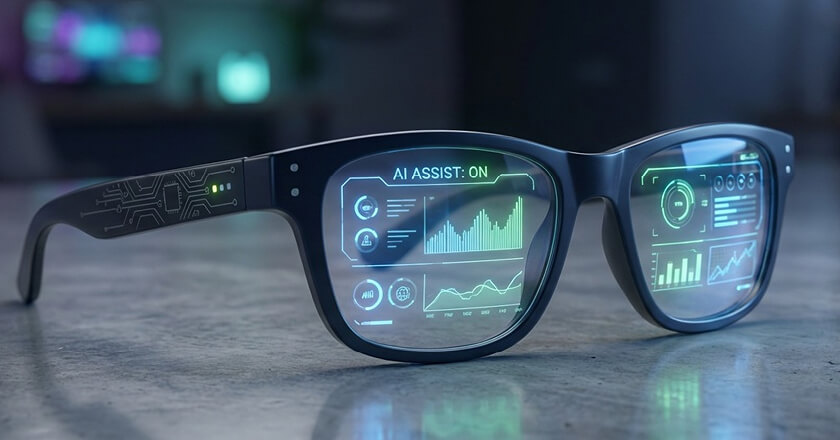
HTC recently launched its AI-powered Vive Eagle smart glasses in North America, Europe and Australia for $499. A launch that steps directly into an arena with growing consumer concerns over secret recordings.
Designed with a privacy-first architecture, the eyewear features 3K video recording, Zeiss lens options, local AES-256 data encryption, and multi-sensor anti-tamper LEDs. Users can toggle between OpenAI’s ChatGPT and Google Gemini models, which process de-identified requests to prevent AI profiling.
The eyewear will ship in two distinct styles and multiple colour variants.
The U.S. market entry follows HTC’s initial unveiling of the Vive Eagle last year, where the company targeted the smart glasses segment with an early rollout in its home market of Taiwan.
To counter surveillance anxieties, the Vive Eagle incorporates hardware-level safeguards designed to prevent covert filming. The glasses feature a prominent recording LED backed by ambient light and proximity sensors; if the light is obstructed or tampered with, the camera functionality immediately shuts off.
Additionally, the device requires active contact with the wearer’s face to record, and HTC has implemented a feature allowing people nearby to stop an active recording using a simple voice command.
On the software side, requests processed through partner AI platforms are anonymised, and no captured data is used to train AI models.
By emphasising stringent privacy controls alongside multi-model AI access, HTC aims to carve out a distinct position in a rapidly expanding yet increasingly scrutinised consumer category.
Source: Mobile World Live
Image Credit: ShutterStock
Source: Tahawul Tech
